Android 12 Car Stereo User Manual PDF: Article Plan
This document details the operation, specifications, and connectivity of your Android 12 car stereo, including Bluetooth, radio, and Android Auto features.
Android 12 car stereos integrate navigation, entertainment, and communication, offering enhanced features like improved Bluetooth (V4.0, 5m range) and Android Auto compatibility.
What is an Android 12 Car Stereo?
An Android 12 car stereo is an in-vehicle entertainment system powered by Google’s Android 12 operating system. Unlike traditional car stereos, these units function much like smartphones or tablets, offering a touchscreen interface and access to a wide range of applications. They typically support features such as GPS navigation, Bluetooth connectivity for hands-free calling and audio streaming, and compatibility with Android Auto.
These systems boast specifications like a maximum audio output of 2 Vrms, a frequency response of 20 Hz ‒ 20 KHz, and video sensitivity of -20 dB with a signal-to-noise ratio of 60 dB. Power requirements are generally DC 12V with a negative ground and a maximum load impedance of 4 Ohms. They represent a significant upgrade in automotive infotainment, providing a connected and customizable driving experience.
Benefits of Upgrading to Android 12
Upgrading to an Android 12 car stereo unlocks a host of advantages over older systems. Enjoy seamless integration with your smartphone via Android Auto, offering navigation, communication, and entertainment. Benefit from improved performance, enhanced security features, and a more intuitive user interface provided by the Android 12 OS.
Expect superior audio quality with specifications like a frequency response of 20 Hz ⎯ 20 KHz and a signal-to-noise ratio of 85 dB. Bluetooth V4.0 ensures stable connectivity up to 5 meters. Furthermore, the CJEU ruling supports interoperability, ensuring future compatibility. A modern stereo with 60 Watts x 4 (RMS) power output delivers a richer, more immersive listening experience.
Scope of this User Manual
This user manual provides comprehensive guidance for installing, configuring, and operating your Android 12 car stereo. It covers essential functions like date and time setting, radio operation (including FM frequency range of 87.5 ⎯ 108 MHz and stereo/mono conversion), and Bluetooth connectivity (V4.0, up to 5 meters).
Detailed specifications are included, encompassing electrical characteristics (DC 12V, 4 Ohm impedance), audio section performance (2 Vrms output, 60 dB signal-to-noise ratio), and video section details (15 dB sensitivity). Information regarding Android Auto interoperability, influenced by the CJEU ruling, is also presented. This manual aims to ensure a user-friendly experience.
System Specifications
This section outlines the technical details of the Android 12 car stereo, including electrical, audio, and video specifications for optimal performance.
Electrical Characteristics
Understanding the electrical requirements is crucial for safe and reliable operation. This Android 12 car stereo is designed to operate on a DC 12V negative ground electrical system, standard in most vehicles. Ensure your vehicle’s electrical system meets this requirement before installation.
Load Impedance is a key factor in audio performance. This unit supports a maximum load impedance of 4 Ohms. Connecting speakers with lower impedance may damage the amplifier. The power output is rated at 60 Watts x 4 (RMS), providing ample power for a quality listening experience. Proper wiring and fusing are essential for preventing electrical issues and protecting the unit.
Power Requirement (DC 12V, Negative Ground)
This unit is specifically designed for vehicles with a 12V DC negative ground electrical system. Attempting to operate it with a different voltage or polarity can cause severe damage and void the warranty. Verify your vehicle’s system before installation.
A negative ground system means the chassis of the vehicle is connected to the negative terminal of the battery. Ensure the power cable is securely connected to the negative terminal of the battery and properly fused. Incorrect polarity connection will instantly damage the stereo. Always disconnect the negative battery terminal before installation to prevent short circuits.
Load Impedance (4 Ohms Maximum)
The car stereo’s amplifier is designed to operate optimally with speakers having an impedance of 4 Ohms or higher. Connecting speakers with a lower impedance (e.g., 2 Ohms) can overload and potentially damage the amplifier, leading to distortion or complete failure.
Always check the impedance rating of your speakers before connecting them to the stereo. Using speakers with the correct impedance ensures efficient power transfer and optimal sound quality. Connecting multiple speakers in parallel can lower the overall impedance; ensure the final impedance remains at or above 4 Ohms. Failure to adhere to this specification voids the warranty.
Audio Section Specifications
The audio section of this Android 12 car stereo is engineered for high-fidelity sound reproduction. It boasts a maximum output level of 2 Vrms /-3 dB, delivering a clean and powerful audio signal to your speakers. The frequency response spans from 20 Hz to 20 KHz, ensuring a full range of audible frequencies are accurately reproduced.
Furthermore, the audio section features a high signal-to-noise ratio of 85 dB, minimizing unwanted background noise for a clearer listening experience. Channel separation is excellent at 80 dB, providing distinct stereo imaging. Tone controls allow for Bass adjustment at 100 Hz /- 8 dB and Treble at 10 KHz /- 8 dB.
Maximum Output Level (2 Vrms /-3 dB)
The maximum output level of 2 Vrms /-3 dB signifies the highest voltage the audio output can deliver without significant distortion. This specification is crucial for matching the stereo with compatible amplifiers and speakers, ensuring optimal performance and preventing damage. A higher output level generally translates to louder sound, but it’s essential to consider the impedance of connected devices.
This value indicates the stereo’s ability to drive speakers effectively, providing a strong and clear audio signal. Maintaining the signal within the specified range prevents clipping and preserves audio quality. Proper gain staging, adjusting input and output levels, is recommended to maximize the stereo’s potential.
Frequency Response (20 Hz ⎯ 20 KHz)
The frequency response of 20 Hz ⎯ 20 KHz defines the range of audible frequencies the car stereo can reproduce effectively. This range encompasses the full spectrum of human hearing, from deep bass (20 Hz) to high treble (20 KHz). A wider frequency response generally indicates a more accurate and detailed sound reproduction.
This specification ensures that all audible frequencies are represented in the output signal, providing a rich and immersive listening experience. Variations within this range are measured in decibels (dB), indicating how consistently the stereo reproduces each frequency. A flatter response curve is desirable, minimizing coloration of the sound.
Video Section Specifications
The video section specifications detail the performance characteristics of the car stereo’s video playback capabilities. Key metrics include usable sensitivity (-20 dB): 15 dB, indicating the minimum signal strength required for a clear picture. Signal-to-noise ratio, measured at 60 dB, reflects the clarity of the video signal relative to background noise – a higher ratio signifies a cleaner image.
The system supports NTSC video format, and boasts a video output level of 1.0 Vp-p at 75 Ohms. Horizontal resolution is specified at 500 lines, impacting image sharpness. These specifications ensure compatibility and optimal video quality when connected to external displays or utilizing video playback features.
Usable Sensitivity (-20 dB): 15 dB
This specification defines the minimum video signal strength, measured in decibels (dB), required for the car stereo to produce a discernible image. A value of -20 dB with a sensitivity of 15 dB indicates the input signal level needed to achieve a standard picture quality. Lower sensitivity values generally mean the system can work with weaker signals.
Essentially, it dictates how well the unit can handle low-quality or distant video sources; A higher dB value would suggest a stronger signal is needed. This is crucial for connecting external video devices, ensuring compatibility and optimal performance, even with less-than-ideal signal transmission. Maintaining this level ensures clear video playback.
Signal to Noise Ratio (60 dB)
The Signal to Noise Ratio (SNR), measured in decibels (dB), represents the difference between the strength of the desired audio or video signal and the level of background noise. A ratio of 60 dB signifies that the signal is 1,000 times stronger than the noise, resulting in a cleaner and clearer output. This is a key indicator of audio and video quality.
Higher SNR values are preferable, indicating less interference and a more pristine experience. A 60 dB SNR suggests a good level of performance, suitable for most in-car entertainment needs. Factors like cable quality and external interference can affect this ratio, impacting the overall clarity of the sound and picture.
Basic Operations & Setup
This section guides users through essential setup procedures, including configuring the date and time, and mastering fundamental radio operation features.
Date and Time Setting
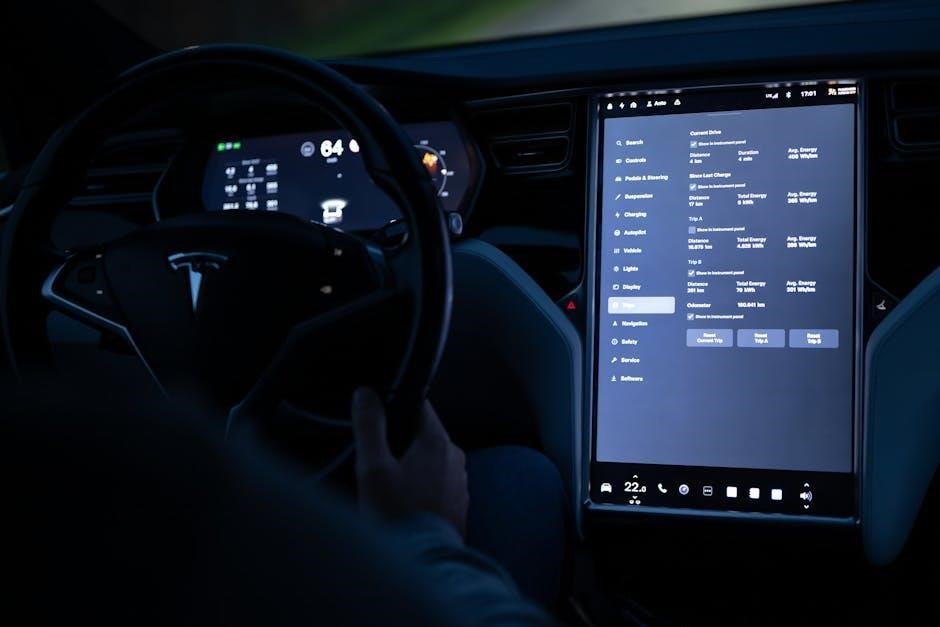
Accurate date and time settings are crucial for various functions, including GPS navigation, time-stamped recordings, and scheduled features. To adjust these settings, navigate to the ‘Settings’ menu on your Android 12 car stereo. Locate the ‘Date & Time’ option – it’s typically found under ‘System’ or ‘General Management’.
You’ll be presented with options to automatically set the date and time using network-provided time, or to manually configure them. If choosing manual setup, carefully input the correct date, month, and year. Subsequently, set the hour and minute, ensuring you select the correct AM/PM designation.
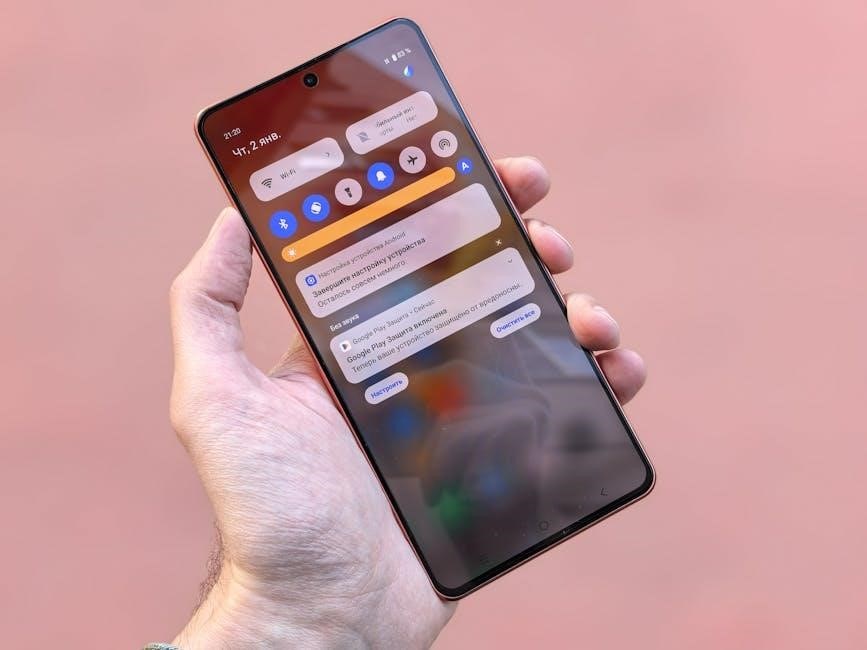
Also, select and set the preferred time display format according to your time zone. Confirm your selections by pressing ‘Save’ or ‘OK’. Incorrect date and time settings can affect the functionality of several applications, so double-check for accuracy.
Radio Operation
To access radio functionality, enter ‘Radio’ mode by briefly pressing the function button on the front panel or softly clicking the ‘Radio’ icon on the touchscreen. The system will automatically scan for available FM radio stations within the frequency range of 87.5 ‒ 108 MHz;
You can manually tune to specific frequencies using the tuning controls, or utilize the ‘Scan’ function to automatically search for stations. Once a station is found, you can save it as a preset for quick access.
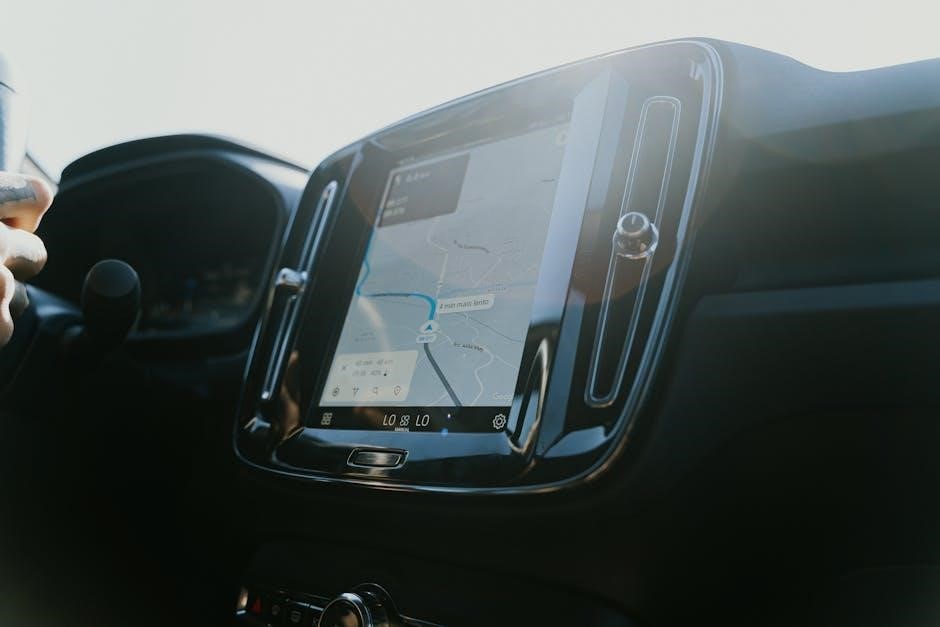
The ‘ST’ setting controls stereo/mono conversion. In areas with a strong FM signal, stereo reception provides enhanced audio quality. However, in areas with a weak signal, switching to mono can improve clarity. Experiment with the ST setting to optimize reception based on your location.
FM Radio Frequency Range (87.5 ⎯ 108 MHz)
This car stereo’s FM radio tuner operates within the standard frequency range of 87.5 to 108 MHz, covering most broadcasting allocations globally. This range allows access to a wide variety of FM radio stations, providing diverse entertainment and information options while driving.
Signal strength and clarity will vary depending on your geographical location, distance from the transmitter, and potential interference. Urban areas generally offer stronger signals, while rural locations may experience weaker reception.
The system is designed to automatically scan and identify available stations within this frequency band. Users can also manually input specific frequencies for direct tuning, ensuring access to desired broadcasts.
Stereo/Mono Conversion (ST Setting)
The ‘ST’ setting controls the stereo/mono conversion function of the FM radio. In areas with strong, clear FM signals, the stereo mode provides a wider, more immersive soundstage. However, in regions with weak or unstable signals, stereo reception can suffer from noise and distortion.
Switching to mono mode combines the left and right audio channels into a single signal, improving signal clarity and reducing interference. This is particularly useful when driving in areas with poor FM reception, such as rural locations or areas with tall buildings.
The system automatically detects and adjusts the stereo/mono setting based on signal strength, but users can manually override this to optimize audio quality.
Connectivity Features
Explore seamless integration with Bluetooth V4.0 (5m range), auxiliary inputs, and Android Auto, enhancing your driving experience with versatile connection options.
Bluetooth Connectivity (V4.0, 5 meters Max Distance)
Pairing Your Device: To connect via Bluetooth (V4.0), ensure your car stereo is in Bluetooth mode. Activate Bluetooth on your smartphone or tablet and search for available devices. Select your car stereo from the list – the pairing process may require a PIN (typically ‘0000’). Once paired, your device will automatically reconnect when in range.
Audio Streaming: Enjoy wireless audio playback from your smartphone or other Bluetooth-enabled devices. Control playback directly from your device or through the car stereo’s interface. The maximum operating distance is 5 meters, providing a stable connection within the vehicle.
Signal Quality: A strong Bluetooth signal ensures optimal audio quality. Interference from other devices can occasionally occur; repositioning your device may improve connectivity. The signal to noise ratio is 85 dB, delivering clear audio.
Auxiliary Function Selection
Utilizing the AUX Input: The auxiliary function allows connection of external audio devices, such as MP3 players or smartphones, via a 3.5mm audio cable (not included). Select the “AUX” source on your car stereo to activate this function. Ensure the audio cable is securely connected to both the stereo and your external device.
Audio Quality: The auxiliary input provides a direct audio connection, bypassing Bluetooth compression for potentially higher fidelity sound. Adjust the volume on both your car stereo and the connected device to achieve the desired listening level. Maximum Output Level is 2 Vrms /-3 dB.
Troubleshooting: If no sound is heard, verify the cable connection and ensure the correct source is selected. Check the volume levels on both devices.
Android Auto Interoperability (CJEU Ruling)
Understanding the Ruling: On February 25, 2025, the Court of Justice of the EU (CJEU) issued a landmark judgment regarding Google Android Auto interoperability. This ruling clarifies that dominant digital platforms may be required to provide interoperability information, even if it didn’t previously exist.
Impact on Users: This decision aims to foster competition and innovation within the Android ecosystem, potentially leading to broader compatibility and enhanced functionality for Android Auto users. It ensures fairer access to platform features.
Future Implications: While the full impact is still unfolding, this ruling could necessitate changes in how Android Auto operates, promoting greater openness and interoperability with third-party applications and devices.
